
The history of the Ipogeo dei Cristallini in short
The Ipogeo dei Cristallini is a Hellenistic tomb complex that dates to the 4th century BC. It lies in the Sanità valley, which was a burial ground outside the walls of ancient Neapolis. Four neighbouring tomb complexes, labelled A to D, were cut into the tuff, each with chambers on two levels.
Baron Giovanni di Donato found the tombs in 1889 while working under his palazzo. The site opened to visitors on 24 June 2022 after a restoration project that began in 2020. If you want to see the chambers yourself, start with the tickets and booking page.
Neapolis and the valley of the dead
Ancient cities kept their dead outside the walls. In Neapolis that place was the valley now called the Sanità, with its Valle dei Vergini. Chamber tombs were dug there from the 4th century BC. Later the same area received Christian catacombs, and the Fontanelle ossuary.
These sites belong to different periods and are not one route. The Ipogeo is a Hellenistic tomb complex, so it is not a Christian catacomb. For the later burial places, see the Catacombs of San Gennaro, the Catacombs of San Gaudioso and the Fontanelle Cemetery.
Our pick: three underground sites
This tour puts the Hellenistic tombs next to the Purgatorio ad Arco church and the Neapolis excavations, so you see how the city's layers fit together.
Hand-picked tours, booked through GetYourGuide. Prices are indicative starting prices in euros (as of October 2026). Tap a tour for live availability and the current price in your currency.
Visit the Ipogeo dei Cristallini
A guided visit, an audio guide visit and a neighbourhood walk that includes the Ipogeo entry.
Four tombs and how they are built
Each complex follows the same idea: a room for the rites above, the burial chamber below.
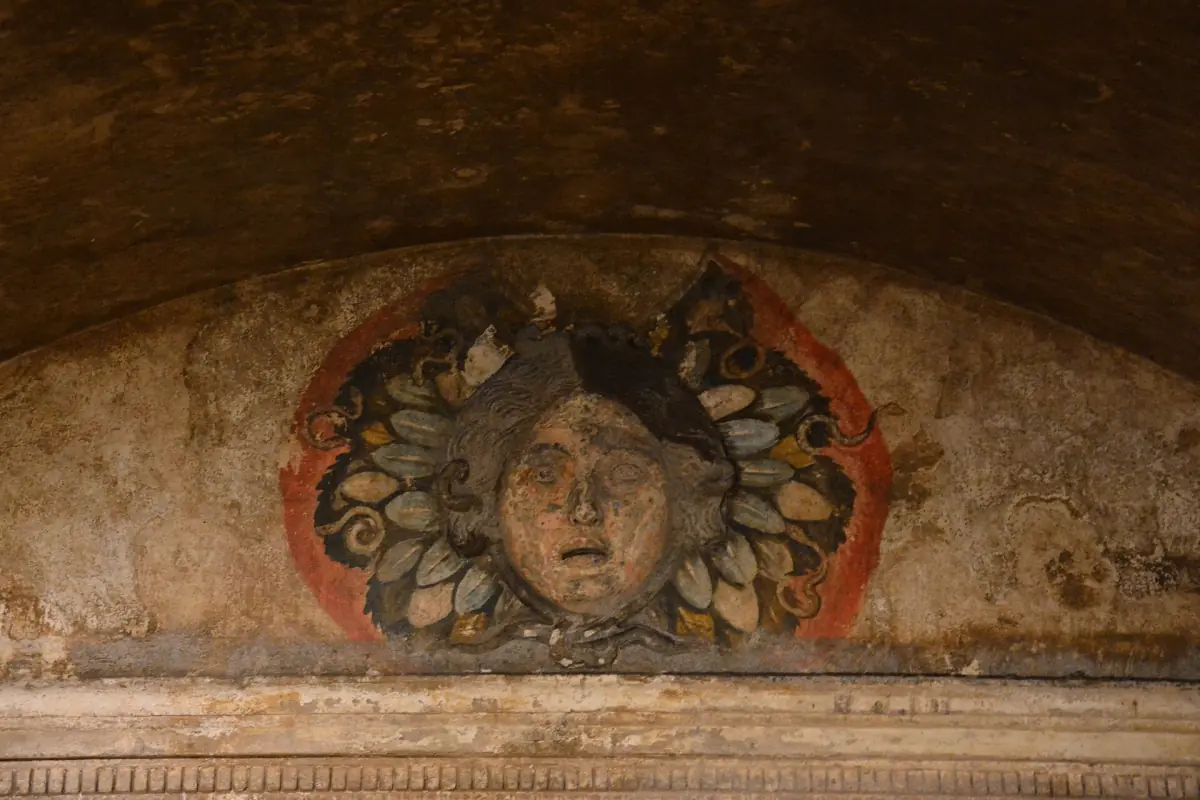
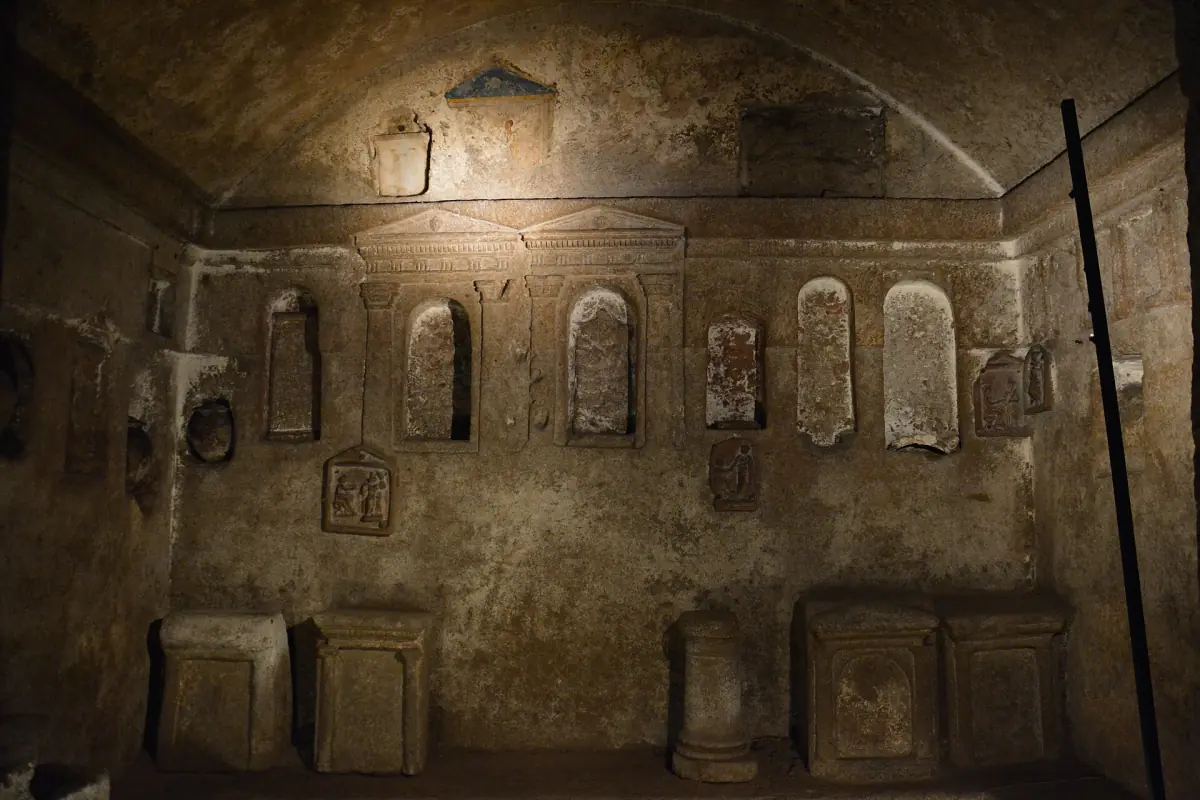
The upper chamber served as an antechamber for burial rituals. Below it lies the actual burial chamber. The walls carry coloured painting with illusionistic architecture and decorative elements, and the chambers contain stone benches for the dead.
The four tombs lie side by side. They were cut into the soft tuff rock.
The discovery in 1889
In 1889 Baron Giovanni di Donato came across the tombs during work under his palazzo. He may have been looking for water or for tuff. The palazzo still stands above the site and carries his family name, Palazzo di Donato.
The complex passed down through the family. Today it is privately owned by descendants, not a municipal museum, and the family took the initiative to open it to the public in 2018.
Medusa and the stone couches
One painted detail is a polychrome Medusa head. A digital recording project documented all four tomb chambers, the stone benches and the Medusa in December 2024. Which rooms are open on your day can differ, so ask when you book.
Restoration and opening
The restoration and opening project started on 23 September 2020. Its first phase was finished in June 2022, and the Ipogeo opened to visitors on 24 June 2022. Scientific supervision came from the Soprintendenza for Naples, and the Istituto Centrale per il Restauro carried out studies. Funding came from EU and Campania region programmes for 2014–2020 and 2021–2027.
Finds in the Naples Archaeological Museum
The family lent grave goods for the "Napoli Antica" section of the Naples Archaeological Museum. They include pottery, terracottas and reliefs, used from the second half of the 4th century BC to the 1st century AD. The section is being rearranged, so check the museum before you count on seeing them.
Visiting a burial place
These are tombs, so keep voices low and follow your guide. The district around them is home to people who live there, which you can see on our page about the Rione Sanità.
Ipogeo dei Cristallini history: frequently asked questions
How old is the Ipogeo dei Cristallini?
The tombs were built in Greek times and date to the 4th century BC. Burial goods from the complex were used from the second half of the 4th century BC to the 1st century AD.
Who found it?
Baron Giovanni di Donato found the tombs in 1889 during work under his palazzo.
Is it a catacomb?
No. It is a Hellenistic tomb complex with four neighbouring tombs. The Christian catacombs of the Sanità, such as San Gennaro and San Gaudioso, belong to a later period.
When did it open to visitors?
On 24 June 2022, after a restoration project that began in 2020.
Can I see objects from the Ipogeo in the museum?
Grave goods lent by the family are linked to the "Napoli Antica" section of the Naples Archaeological Museum. The section is being rearranged, so check before you go.